9: Painting...large.
My first paintings were small—often not more than 14" wide. I was working in a variety of mediums with prints, drawings, and paintings, so I chose a smaller format as a constant — it was a practical way to create a larger body of work.
When I started to paint exclusively, I moved upstairs to the painting department and had my own 12 foot square studio space. One of my mentors said "why don’t you scale these up in size — you might not get another chance to paint this large for a long time…"
For the remainder of my time at the Institute, I did just that. The tools of my trade were large brushes, lots of oil paints, and a step stool to stand on. I built my own stretchers in the wood shop. I stretched, primed, & gessoed my own canvas. I learned so much from my colleagues and reading Ralph Mayer’s The Artist’s Handbook (the bible). I also had to work totally differently— I could no longer sit but had to stand and walk back & forth just to see. And as my working method changed, my imagery evolved.
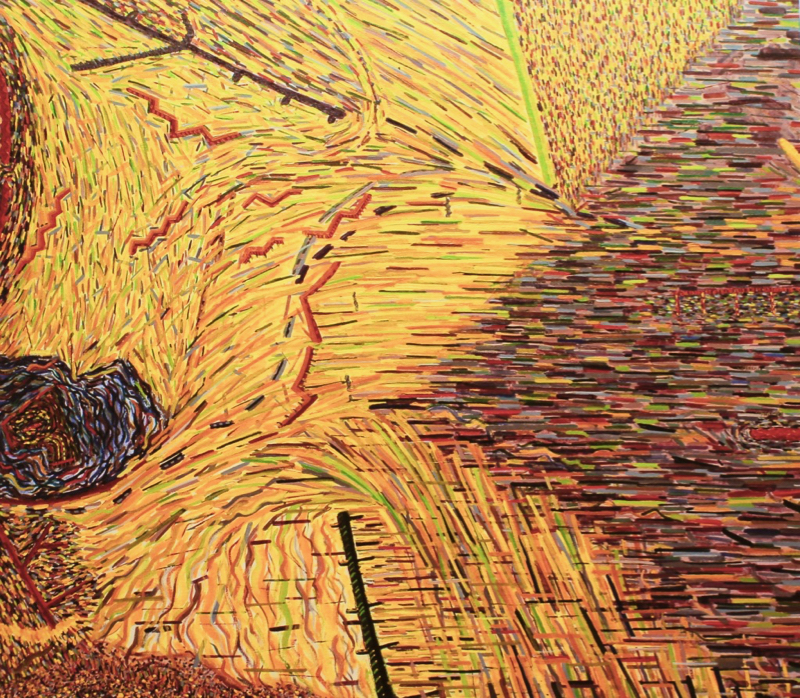
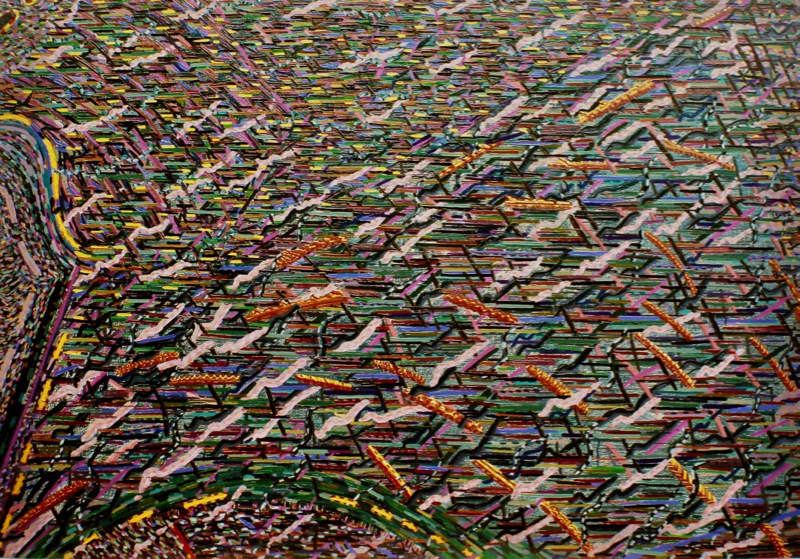
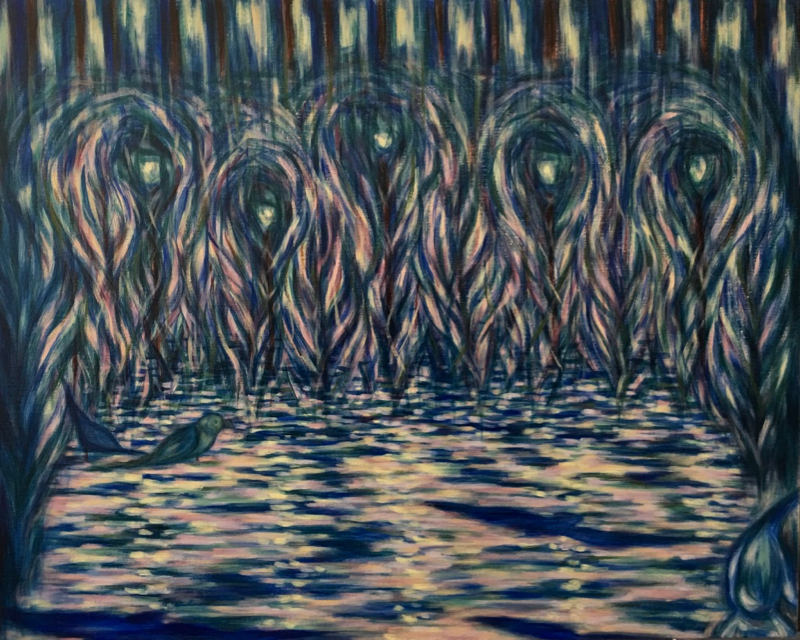
These, BeverlyRevisited ( 4’ x 6’), and Firefly ( 90" square) were a couple of my first smaller, large canvases.


8: Painting

I started my artist life thinking that I wanted to be a printmaker. This idea took root as an art history undergraduate, writing a research paper on 2 Picasso etchings, which I just loved( The Frugal Repast & The Dance of Salomé). My professor suggested that I take the one & only studio class in printmaking (at that time) so that I could more fully understand Picasso’s works from the artist’s point of view. Her suggestion was life-changing. From that first studio class on, I dropped the idea of becoming an art historian in order to devote full time to making art.
I loved learning the magical technical processes of revealing and building an image. As I mentioned previously, printmaking felt so analogous to my tailoring and needlework projects. But the technical process didn’t sync well with my visual needs, which were still at an incipient stage. I knew that I needed to start with more open ended chaos and then find my way to a unified ending. For me, it always felt more natural to start a work with an idea which developed intuitively throughout the entire time of its making. In printmaking studios, I felt increasingly frustrated because my technical skills were more orderly, & more linear, than my rather circuitous creative process. I envied some of my colleagues who started their etchings or silkscreens with a finished prototype, the color and tonal issues fully worked out, and then went on to complete their editions perfectly, just like their original model. I tried working like this, more methodically, but most of the time I ended up dissatisfied with the end point. Too often, I could not arrive at the right balance between technique & finished image. Although I began my Chicago studies in both printmaking & painting, I gave myself permission to let go of becoming the MasterPrintmaker.